 From Nomra · Words
How Vocabulary Test works
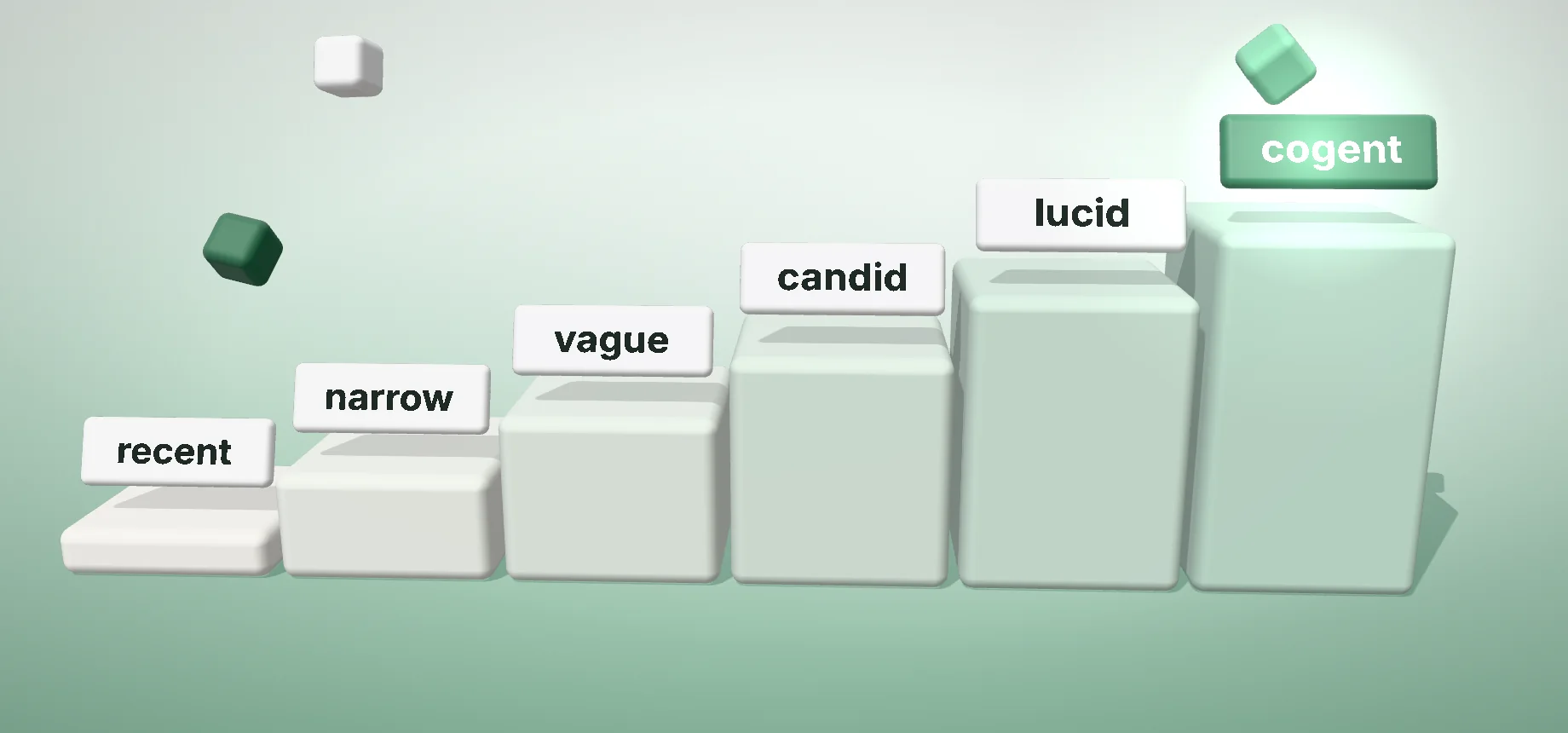
You see 24 words, four from each of six bands that run from everyday words to rare ones. For each word, pick its meaning from four options, or choose "I don’t know this word".
Each band stands for a range of English words ranked by how often they appear in text. Your answers in a band estimate how much of that range you know. Wrong guesses count against you, so the estimate does not reward guessing. The bands add up to your estimated number of words.
What is a good score?
The result is an estimate from 24 words, not a standardized vocabulary test, so two runs can differ by a few thousand. The bands count word forms as they appear in text, so plurals and other forms count separately, and the totals run higher than the word family counts used in research. The test tops out at 60,000.
Use it to compare runs with yourself or with friends, not as a grade.
Source: Word bands from wordfreq, Robyn Speer, open word frequency data for English
Three tips
- Choose "I don’t know" when you have no idea. A wrong guess lowers the estimate more than an honest skip.
- Read all four meanings before you tap. Two of them are often close.
- Take the test twice on different days and look at the average.
Questions
How is the number worked out?
Each of six bands covers a range of English words by frequency. In each band, right answers minus a third of wrong answers, out of the words asked, gives the share of that band you probably know. The shares times the band sizes add up to your estimate.
Why do my results change between runs?
Each run draws a different sample of words, and 24 words is a small sample. Treat the result as a range around the number.
Is this a school vocabulary test?
No. It is a quick estimate from the Nomra vocabulary app, made for curiosity and comparison, not for grading.
Does it compare me with a native speaker?
No. It estimates how many English words you know from your answers, without a native speaker norm. Learners and native speakers take the same test, so you can compare runs with friends or with yourself over time.
Using this in class? See Mindima Play for teachers.