 From Memra · Memory
How Quick Pairs works
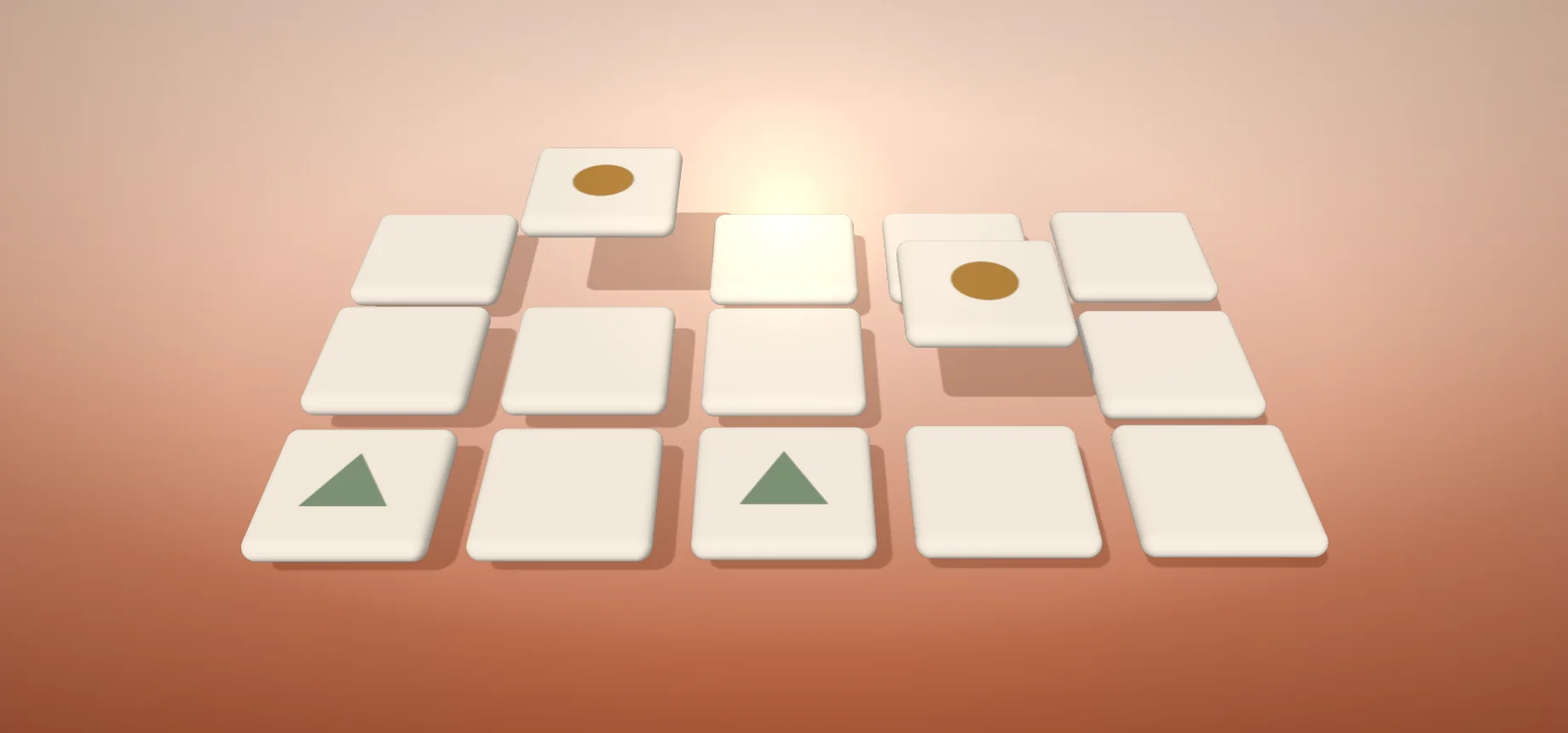
Tiles lie face down. Flip two at a time. A match stays face up; a miss flips back after a short look.
Each board grows, from 3 pairs up to 10, and the look after a miss gets shorter. You play against a 75 second clock, and every board you clear adds 8 seconds. Faster matches and streaks score more.
What is a good score?
There is no published norm for this exact game, so the best comparison is your own best score. Clearing boards with few wrong flips matters more than speed early on, because each cleared board buys you more time for the larger boards.
Three tips
- Turn over a tile you have not seen yet before guessing at one you half remember.
- Name each picture quietly as it flips. A word sticks better than a glimpse.
- Work the board in rows so you always know which tiles you have already seen.
Questions
How does the clock work?
You start with 75 seconds. Every cleared board adds 8 seconds, so clean boards keep the run going.
Does the board get harder?
Yes. Boards grow from 3 to 10 pairs, and a missed pair stays visible for less time as you go.
Is this the same as the card game Memory?
It uses the same idea of matching face down pairs, played against a clock in your browser.
Read next: How to improve your memory
Using this in class? See Mindima Play for teachers.